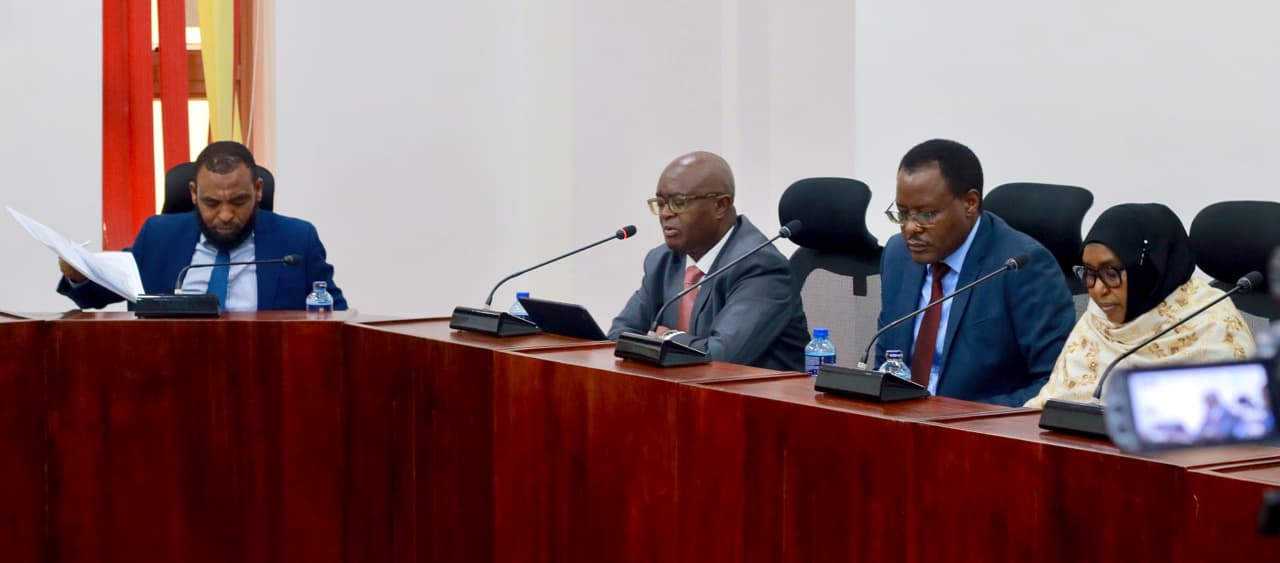
The Kenya Urban Roads Authority (KURA) has provided a clearer picture of its workforce to senators, highlighting efforts to build a more inclusive and representative institution.
Appearing before the Senate Committee on Cohesion and Equal Opportunities on Monday, the agency not only presented staffing numbers but also outlined how it is aligning its operations with constitutional requirements on diversity, fairness, and equal opportunity.
KURA, which operates under the Ministry of Roads and Transport, reiterated its core mandate of managing, developing, rehabilitating, and maintaining urban trunk roads across the country. However, the focus this time shifted from infrastructure to its workforce—who they are, where they come from, and how they are represented.
Latest Stories
- Strategic Advisor Okango slams Linda Mwananchi faction, says it doesn't represent ODM
- Chess Kenya picks four visually impaired for Montenegro tourney
- Two Kenyans among 14 dead in South Sudan plane crash
- Njeri Maina: I will not resign from UDA over political alignment with DCP
- Kilimani’s Wood Avenue fully reopened after major road makeover
Director General Silas Kinoti told senators that the authority currently employs 309 staff drawn from various ethnic communities. The data presented showed representation from major groups including Kalenjin, Kikuyu, Luo, Luhya, and Kamba, reflecting an attempt—at least on paper—to mirror the country’s diversity.
However, the report also revealed a largely middle-aged workforce, with minimal youth representation.
“Majority of the staff are aged between 41 and 50, representing 49.84 per cent of the total staff. There is only one employee aged 30 years and below, forming about 0.3 percent of the authority’s workforce,” the report indicated.
On inclusion, KURA reported that 12 employees—about 3.87 per cent of its workforce—are persons with disabilities, spread across different age groups and ethnic backgrounds. While this shows some level of inclusion, it also highlights the slow pace of integrating vulnerable groups into public service employment.
Kinoti assured the committee that recruitment processes are guided by clear constitutional and legal frameworks designed to promote fairness and diversity.
“The final shortlist shall take into consideration merit, Kenya’s diverse communities, gender, youth, ethnicity, marginalized and minority communities, and persons with disabilities, in accordance with Articles 10, 27, 54 and 232 of the Constitution and the Public Service Commission Act, 2017,” Kinoti told senators.
Despite these commitments, the authority acknowledged that it has not recruited new staff in the last two financial years.
“The authority did not undertake any recruitment of staff in the financial years 2023/24 and 2024/25. However, an advertisement to fill 33 vacancies was made on 13th January 2026 and the selection process is ongoing,” the report noted.
To bridge staffing gaps and support skills development, KURA said it continues to offer internship and attachment opportunities for young professionals.
“The authority also engages interns for a period of one year and students on attachment for three months. The internship program is supported by stakeholders including the Public Service Commission, Engineers Board of Kenya, and the Kenya Roads Board,” Kinoti said.
KURA said these measures are anchored in its Human Resource Policy and Procedures Manual, aligned with constitutional principles of equity and inclusivity.
The presentation comes amid growing pressure from lawmakers for public institutions to demonstrate measurable progress in diversity and inclusion beyond policy commitments.
The report is expected to be tabled before the full Senate once the committee completes its scrutiny, with recommendations to follow.


Comments
Sign in with Google to comment, reply, and like comments.
Continue with Google